
Carroll County Divorce Decree
Carroll County divorce decree records are maintained at the Court of Common Pleas in Carrollton. The Clerk of Courts keeps all divorce filings, dissolution agreements, and final court judgments for this rural eastern Ohio county. If you need to find a divorce decree in Carroll County, the clerk's office is the first place to check. You can visit the courthouse during business hours, call the office by phone, or send a mail request. The court handles domestic relations cases for the entire county, and records stretch back many years in the system. Getting a copy of a decree is a simple process that most people can complete with one visit or phone call.
Carroll County Overview
Carroll County Court of Common Pleas
The Carroll County Court of Common Pleas handles all divorce decree cases in the county. The judge addresses domestic relations matters directly, with local rules that govern how cases move through the system. The court sits in Carrollton, which is the county seat. Parenting education is required for couples with children, and mediation is available for those who want to try settling disputes without a full trial.
Carroll County is a small, rural county in eastern Ohio. The Clerk of Courts maintains records for all domestic relations cases, both paper files and what has been entered into the electronic system. You can search by party name or case number. Staff at the courthouse can help you find what you are looking for if you come in during business hours. The clerk's office also handles certified copies. Walk-in visits are welcome, and the staff is used to helping people who need to track down old divorce decree files. If you know the year the case was filed, that detail helps narrow things down quickly.
| Court | Carroll County Court of Common Pleas - Domestic Relations |
|---|---|
| Address |
119 S Lisbon Street Carrollton, OH 44615 |
| Phone | (330) 627-2350 (Court) / (330) 627-2450 (Clerk) |
| Hours | Monday through Friday, 8:30 AM to 4:30 PM |
| Website | Carroll County Court of Common Pleas |
Searching for Carroll County Divorce Records
Searching for a divorce decree in Carroll County can be done in person or by phone. The clerk's office is the best starting point. Walk in during business hours and ask the staff. They can pull up records by name or case number. Bring your ID.
The Carroll County Clerk of Courts keeps all divorce decree records at the courthouse. You can view the Carroll County court website for case search details.
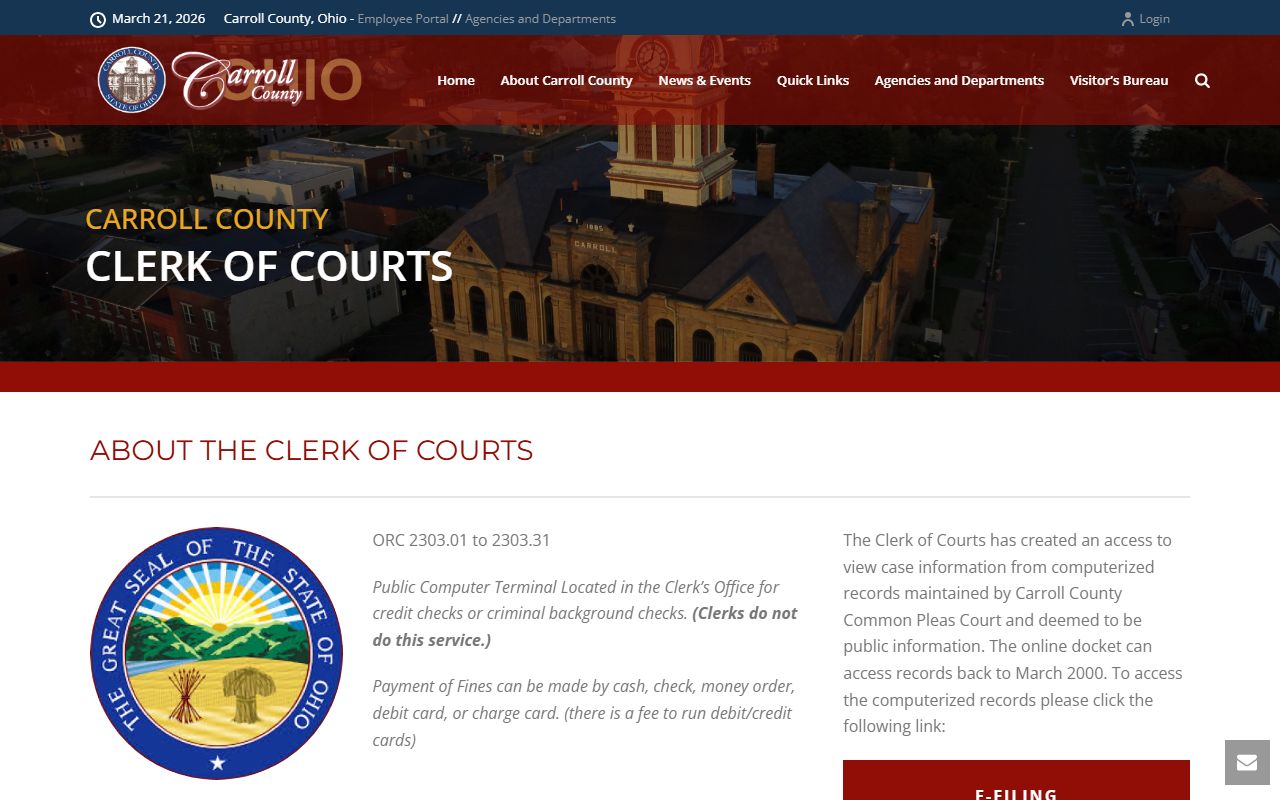
Online search tools may show party names, filing dates, and case status. For the full divorce decree document, you will likely need to visit in person or send a mail request with payment. Phone inquiries are fine for simple questions about whether a record exists. The Supreme Court of Ohio website also provides links to case search tools across the state. Some Carroll County divorce records may appear in statewide databases, though not all older records have been digitized.
Note: Mail requests to Carroll County must include enough details to identify the case, such as party names and approximate filing date.
Carroll County Divorce Decree Filing Process
Filing for a divorce decree in Carroll County follows Ohio state law. Under ORC § 3105.01, either spouse can file a complaint for divorce in the county where they live. Carroll County residents file at the courthouse in Carrollton. The process starts when one spouse files the complaint and serves it on the other party. The court requires parenting education for couples with children going through a divorce.
Ohio law allows both fault and no-fault grounds for divorce. Under ORC § 3105.03, no-fault grounds include living apart for one year or incompatibility if both sides agree. Fault grounds include extreme cruelty, adultery, or gross neglect of duty. Most Carroll County divorce decree cases use no-fault grounds because they are simpler to prove. A dissolution of marriage is another option when both parties agree on all terms. That path tends to be faster and less costly for everyone involved.
You can see the Carroll County courts page for local forms and filing procedures.
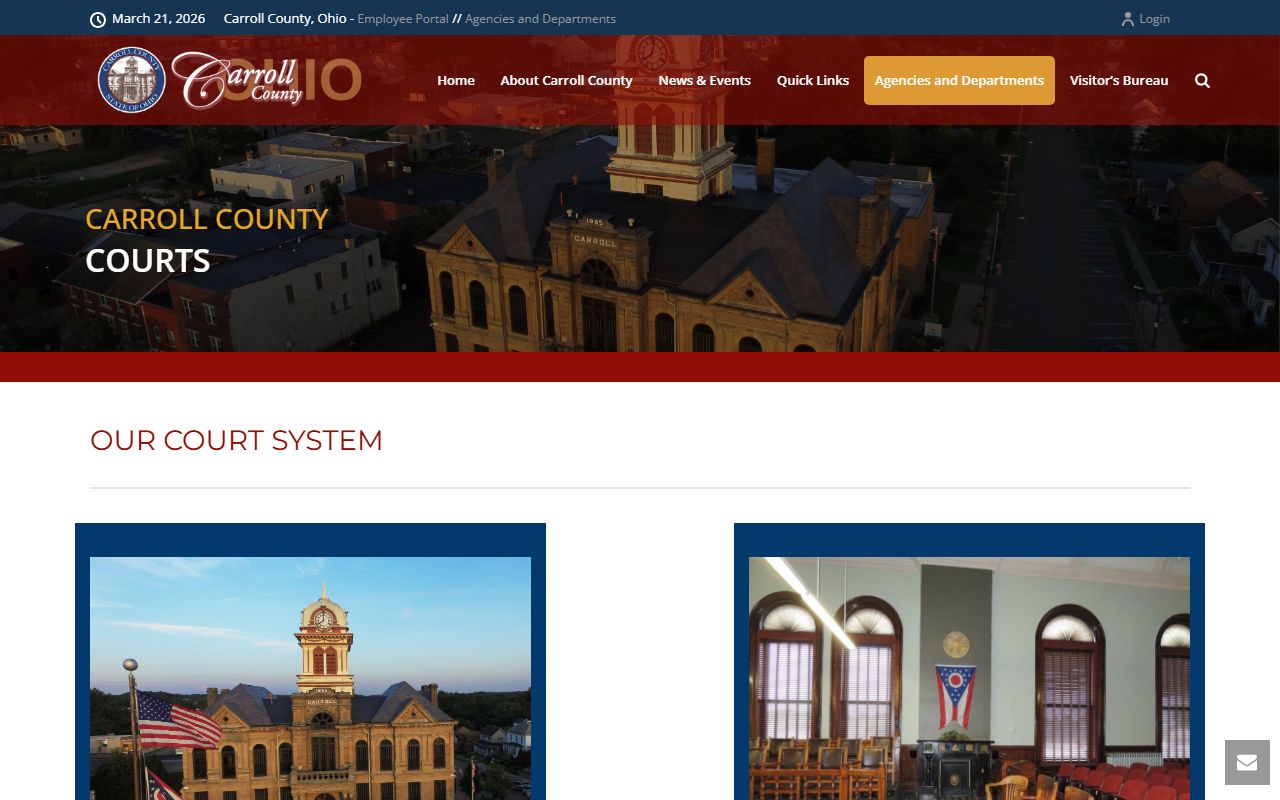
Property division in Carroll County follows Ohio's equitable distribution rules under ORC § 3105.171. The court divides marital property in a way that is fair, though not always equal. Spousal support may be ordered under ORC § 3105.18 based on factors like income, length of the marriage, and each person's needs. Every divorce decree issued in Carroll County will spell out exactly how property and support are handled. Mediation services are available through the court if both sides want to try to work out the terms before going to trial.
Carroll County Divorce Decree Fees
Filing fees for a divorce decree in Carroll County run around $225 to $325, depending on the type of case. A dissolution filing is typically less than a contested divorce. The Clerk of Courts collects all fees at the time of filing. Payment options are posted at the office.
Copy fees are posted at the clerk's office. Certified copies cost more than regular copies. If you need a certified copy of your Carroll County divorce decree for legal purposes, such as changing your name or proving your marital status, expect to pay a small per-page fee. Mail requests must include payment along with a written request that identifies the case. Sealed records require a court order before copies can be made.
Fee waivers exist for people who cannot afford to pay. You file an affidavit of indigency with the court. The judge reviews your financial situation and decides if you qualify. Forms for this are available at the Carroll County courthouse.
What a Carroll County Divorce Decree Contains
A divorce decree from Carroll County includes all the terms of the final judgment. This is the court order that ends the marriage. It covers property division, spousal support, child custody, and parenting time if children are involved. The decree is signed by the judge and filed with the clerk.
Most divorce decree records at the Carroll County courthouse are public. Anyone can ask to see them. You do not need to be a party to the case. However, some information may be sealed or redacted. Financial source documents like tax returns are usually restricted. Information about minor children may have limited access. Sealed records require a court order to open. The Clerk of Courts staff can tell you what is and is not available for any given case file. Under Ohio law, the public has broad access to court records, but judges can seal sensitive information when needed to protect the parties involved in the case.
Note: Carroll County keeps historical records that go back many years, so older divorce decree cases may still be on file.
Legal Help for Carroll County Divorce Cases
If you need help with a divorce decree case in Carroll County, several resources are available. The Ohio State Bar Association runs a lawyer referral service that can match you with a family law attorney in the area. You can also look for legal aid programs that serve eastern Ohio.
The Carroll County courthouse has self-represented litigant resources. These include packets of forms and basic instructions for filing a divorce or dissolution without a lawyer. The clerk's staff can point you to the right forms but cannot give legal advice. For people with low income, legal aid organizations may be able to help at no cost. The Ohio Department of Health also maintains vital statistics records, which can be useful for verifying marriage and divorce records at the state level.
- Ohio State Bar Association lawyer referral
- Legal aid programs serving eastern Ohio
- Self-help resources at the Carroll County courthouse
- Ohio Supreme Court self-help center online
- Court-sponsored mediation services
Appeals from Carroll County divorce decree cases go to the 5th District Court of Appeals. If you disagree with the court's ruling on property division, custody, or support, you must file the appeal within the required time frame set by Ohio law.
Nearby Counties
These counties border Carroll County. Make sure you file your divorce decree in the right county based on where you live.