
Wyandot County Divorce Decree Lookup
Wyandot County divorce decree records are held at the Court of Common Pleas in Upper Sandusky. The Clerk of Courts office maintains all divorce filings, dissolution agreements, and final judgments for this north-central Ohio county. If you want to search for a divorce decree in Wyandot County, you can visit the courthouse in person, call the clerk's office, or send a written request by mail. The staff can search records by party name or case number. Wyandot County is a small, rural county, so the courthouse typically has shorter wait times than busier jurisdictions. Getting a copy of a divorce decree here is straightforward once you have the right details.
Wyandot County Overview
Wyandot County Domestic Relations Court
The Wyandot County Court of Common Pleas handles all divorce decree cases in the county. The Domestic Relations Division manages divorce filings, dissolution petitions, and legal separations. A magistrate assists the judge with case management. The court sits on South Sandusky Avenue in Upper Sandusky.
Wyandot County is a small agricultural county in north-central Ohio. The Wyandot County Clerk of Courts keeps paper and electronic records for all domestic relations cases. You can search by party name or case number. If you know the year the divorce was filed, that helps staff locate the file faster. The clerk handles certified copies of divorce decrees, which are commonly needed for name changes, property matters, or remarriage. Walk-in visits during business hours are the easiest way to get what you need. The staff is accustomed to helping people track down old case files and can check the archives if a record is not in the current system.
| Court | Wyandot County Court of Common Pleas - Domestic Relations |
|---|---|
| Address |
109 S Sandusky Avenue Upper Sandusky, OH 43351 |
| Phone | (419) 294-1432 |
| Hours | Monday through Friday, 8:00 AM to 4:30 PM |
| Website | Wyandot County Courts |
Searching Wyandot County Divorce Records
Looking for a divorce decree in Wyandot County can be done in person or through online tools. The clerk's office at the courthouse in Upper Sandusky is the best starting point. Walk in during business hours. Staff pull records by name or case number. Bring your ID with you.
The Wyandot County Court of Common Pleas keeps all divorce decree records at the courthouse. You can also try the Online tools may show party names, filing dates, and case status. For the full divorce decree document, you will likely need to visit in person or send a mail request to the Wyandot County Clerk of Courts. Phone calls work for simple questions about whether a record exists or what fees to expect.
The Supreme Court of Ohio website has links to case search tools across the state. Some Wyandot County divorce records may appear in statewide databases. Not all older records have been digitized, so an in-person visit to Upper Sandusky may be needed for records from decades past.
Note: Having even an approximate date of filing helps the Wyandot County clerk's staff find your record much faster.
Filing for Divorce in Wyandot County
Filing for a divorce decree in Wyandot County follows Ohio state law. Under ORC § 3105.01, either spouse can file a complaint for divorce in the county where they live. Wyandot County residents file at the courthouse in Upper Sandusky. You must have been an Ohio resident for at least six months and a Wyandot County resident for at least 90 days before you can file.
The Ohio Department of Health maintains vital statistics that can be useful when verifying marriage records before filing for divorce in Wyandot County.

Ohio law allows both fault and no-fault grounds. No-fault grounds include living apart for one year or incompatibility when both sides agree. Fault grounds cover extreme cruelty, adultery, gross neglect of duty, and other causes under the statute. Most Wyandot County divorce decree cases use no-fault grounds because the process is simpler. A dissolution of marriage is available when both spouses agree on every term. Dissolutions go faster through the court and cost less. Parenting education may be required for Wyandot County cases with minor children, and mediation is an option for disputed issues.
Property division in Wyandot County follows Ohio's equitable distribution rules under ORC § 3105.171. The court splits marital property fairly. Spousal support may be ordered under ORC § 3105.18 based on factors like income and marriage length. Every Wyandot County divorce decree spells out exactly how property and support are handled.
Wyandot County Divorce Decree Fees
Filing fees for a divorce decree in Wyandot County typically run from $250 to $325. It varies by case type. Dissolution filings cost less than contested divorces. The Clerk of Courts collects all fees at the time of filing. Cash, check, and money order are accepted.
Copy fees are about $1.00 per page for regular copies. Certified copies cost more per page. If you need a certified copy of your Wyandot County divorce decree for a name change, property transaction, or remarriage, you pay the certified rate. Mail requests need to include payment along with a written request identifying the case by name or number. The clerk's office can tell you the exact cost over the phone so you know what to send.
Fee waivers exist for people who cannot afford to file. You submit an affidavit of indigency to the Wyandot County court, and the judge decides if you qualify. Forms for this are available at the courthouse in Upper Sandusky.
Note: Always call the Wyandot County Clerk of Courts at (419) 294-1432 to confirm current fees.
What a Wyandot County Divorce Decree Contains
A divorce decree from Wyandot County includes all the terms of the final judgment. This court order legally ends the marriage. It covers property division, spousal support, child custody, parenting time, and child support when children are part of the case. The judge signs the decree and the clerk files it as a permanent record.
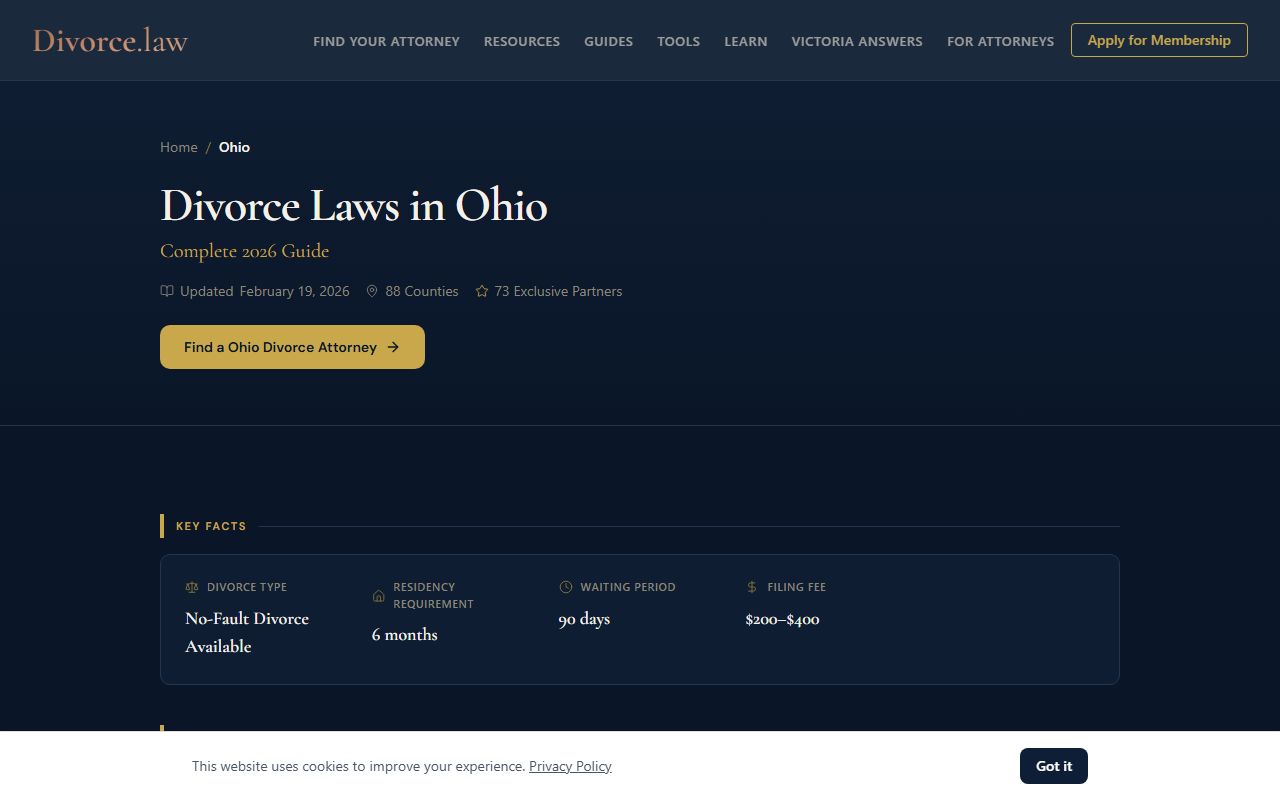
The Ohio Divorce Law Guide provides a detailed overview of what goes into a typical divorce decree and how the process works from filing to final judgment.
Most divorce decree records at the Wyandot County courthouse are public. Anyone can ask to view them. You do not need to be a party to the case. Some information may be sealed or redacted, though. Financial source documents like tax returns are usually restricted from public access. Information about minor children may have limited availability. Sealed records require a court order to open. The clerk's staff at the Wyandot County courthouse can tell you what is accessible for any given case.
Wyandot County Divorce Legal Resources
If you need help with a divorce decree case in Wyandot County, options are available. The Ohio State Bar Association offers a lawyer referral service to connect you with a family law attorney. Legal aid programs serving north-central Ohio may also be able to help.
The Wyandot County courthouse has self-represented litigant resources. These include packets of forms and basic instructions for filing a divorce or dissolution on your own. The clerk's staff can hand you the right forms but they cannot give legal advice. For people with low income, legal aid organizations may assist at no cost. The Ohio Domestic Violence Network provides resources for anyone in an abusive situation who needs to end a marriage. The Ohio Department of Health has vital statistics records that can help with verifying marriage records at the state level.
- Ohio State Bar Association lawyer referral
- Legal Aid of Western Ohio
- Self-help resources at the Wyandot County courthouse
- Ohio Supreme Court self-help center online
- Local pro bono attorney programs
Appeals from Wyandot County divorce decree cases go to the 3rd District Court of Appeals. If you disagree with the court's ruling on property, custody, or support, you must file your appeal within the time frame set by Ohio law. The Ohio court system page has details on the appeals process for domestic relations cases.
Nearby Counties
These counties border Wyandot County. File your divorce decree in the county where you reside.